
How Does a Rotating Anode X-Ray Tube Work? Explained
By:Admin
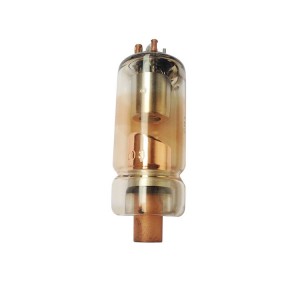
In the field of medical diagnostics, imaging technology plays a critical role in early detection and treatment planning. Among various imaging components, the rotating anode X-ray tube stands out as a pivotal advancement that has significantly enhanced the quality and efficiency of X-ray imaging. This article delves into the working principle of the rotating anode X-ray tube and sheds light on how this technology continues to impact modern medical diagnostics.
### The Basics of X-Ray Tubes
X-ray tubes are fundamental devices used to produce X-rays, which are a form of electromagnetic radiation capable of penetrating human tissue to create images of the internal structures of the body. At the heart of the X-ray tube lies the anode and cathode. Electrons emitted from the cathode are accelerated at high velocities toward the anode, a metal target, where their kinetic energy is converted into X-rays.
### What Sets the Rotating Anode X-Ray Tube Apart?
Conventional X-ray tubes typically use stationary anodes, which limit the amount of heat that can be dissipated during operation. X-ray production generates a considerable amount of heat, and if not managed effectively, this heat can damage the anode and degrade image quality. The rotating anode design was developed to overcome these limitations.
In a rotating anode X-ray tube, the anode is mounted on a rotor and spins at high speeds—often up to 10,000 revolutions per minute. This rapid rotation distributes the heat generated by electron collisions over a larger surface area of the anode target, allowing it to cool more efficiently. As a result, the system can produce higher X-ray intensity while minimizing the risk of damage, enabling shorter exposure times and higher resolution images.
### How the Rotating Anode X-Ray Tube Works
1. **Electron Emission and Acceleration**: The process begins at the cathode, where a filament is heated to release electrons via thermionic emission. These electrons are then accelerated toward the anode by applying a high voltage difference across the tube.
2. **Rotation of the Anode**: Simultaneously, the anode rotates on its axis. This rotation ensures that the electrons strike a constantly changing spot on the target surface, preventing any single area from overheating.
3. **X-Ray Generation**: When the high-energy electrons collide with the tungsten target (commonly used due to its high melting point and atomic number), their kinetic energy is converted primarily into heat and a small proportion into X-rays via bremsstrahlung and characteristic radiation.
4. **Heat Dissipation**: The rotation facilitates even heat distribution, allowing the anode to handle higher power loads compared to a stationary anode.
5. **X-Ray Emission**: The generated X-rays exit through a window in the tube envelope and are directed towards the patient to create diagnostic images.
### Advantages of the Rotating Anode Design
- **Increased Heat Capacity**: The primary advantage is its ability to handle greater heat loads, greatly extending tube life and improving reliability.
- **Enhanced Image Quality**: Higher intensity X-rays allow for better penetration and reduced exposure times, resulting in clearer images.
- **Faster Imaging**: Shorter exposure times minimize motion artifacts, which is crucial in capturing images of moving organs.
- **Versatility**: Rotating anode tubes are suitable for various applications, including general radiography, computed tomography (CT), and fluoroscopy.
### Industry Applications and Innovations
With continuous advancements in materials and engineering, rotating anode X-ray tubes have evolved to meet the stringent demands of modern healthcare systems. High-precision bearings, robust vacuum seals, and advanced cooling systems contribute to improved performance and durability.
Medical institutions worldwide are upgrading their imaging departments to incorporate rotating anode X-ray tubes, realizing their benefits in enhanced diagnostic capabilities. Moreover, manufacturers are focusing on producing compact, energy-efficient models that integrate seamlessly with digital imaging platforms.
### About Our Company
Our company has been at the forefront of medical imaging technology, specializing in the design and manufacture of advanced X-ray tubes, including state-of-the-art rotating anode designs. With decades of experience and a commitment to innovation, we provide reliable, high-performance solutions that empower healthcare professionals to deliver superior patient care.
We invest heavily in research and development to push the boundaries of imaging technology, ensuring that our products meet the highest standards of quality and safety. Our rotating anode X-ray tubes undergo rigorous testing to guarantee optimal heat management, image clarity, and durability.
### Future Outlook
As medical imaging continues to evolve, the role of the rotating anode X-ray tube remains indispensable. Ongoing research aims to further improve target materials, reduce tube size, and enhance heat dissipation techniques to accommodate even higher power outputs. Integration with AI-driven image processing tools promises to maximize diagnostic accuracy while minimizing patient radiation exposure.
In conclusion, the rotating anode X-ray tube represents a remarkable engineering achievement that has transformed diagnostic radiology. By effectively managing heat generation and enabling higher quality imaging, it continues to be a cornerstone of medical imaging technology—supporting clinicians around the world in the diagnosis and treatment of countless conditions.
---
*For more information on our range of X-ray imaging solutions and innovations, please contact our sales and support team or visit our official website.*